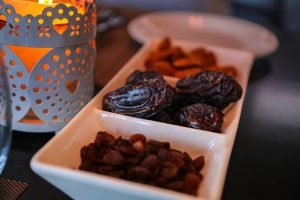
This page reads "kurma Malaysia" as the dates Malaysians buy, eat at iftar and give at Raya. Every one of them is imported, because Malaysia has no commercial date-growing trade. What separates one pack from another is the variety, the country it comes from, the grade and the price per kilo, and those are the things to compare when hunting for kurma murah.
Earlier versions of this page named varieties and farming regions that I could not verify anywhere, so they have been taken out. What is left below can be checked.
Where the dates Malaysians eat come from
Here are eight names from the wholesaler list priced below. The origins and descriptions in this table are the ones that can be stated with confidence; anything beyond them, such as exact sizes or "the sweetest", is a seller's claim.
| Name on the label | Where it comes from | What it is like |
|---|---|---|
| Ajwa (also sold as "Kurma Nabi"). | Madinah, Saudi Arabia. | Small, roundish, near-black, finely wrinkled skin, soft. |
| Safawi. | Madinah region, Saudi Arabia. | Longer than Ajwa, dark brown to black, soft and chewy. |
| Mabroom. | Madinah region, Saudi Arabia. | Long and slender, reddish-brown, semi-dry, chewy. |
| Sukari. | Al-Qassim, Saudi Arabia. | Golden-amber, very sweet; sold soft (rutab) or drier. |
| Medjool. | Originated in Morocco; the packs priced below are from Palestine. | Large, very soft, rich caramel taste. |
| Deglet Noor ("kurma tangkai" when sold on the stem). | Tunisia or Algeria. | Golden, translucent, semi-dry. |
| Mariami. | Iran. | Dark, semi-dry, chewy. |
| Mazafati ("kurma madu", "Rotab Mazafati Bam"). | Bam, Kerman province, Iran. | Dark, very soft, needs refrigeration. |
Two of those names need a note. "Kurma Nabi" is a market name for Ajwa, not a separate fruit. And the stem on kurma tangkai says nothing about Madinah; kurma tangkai is simply Deglet Noor sold on the stem.

What a kilo cost in November 2026
Prices are where "kurma Malaysia" turns into a shopping question, and into a hunt for kurma murah. The table below comes from one Malaysian wholesaler's price list, checked November 2026. For each variety it shows the in-stock listing with the lowest price per kilo on that day.
| Variety | Listing (in stock) | Price | Per kg |
|---|---|---|---|
| Mariami. | Mariami A Normal, 5 kg. | RM75. | RM15. |
| Safawi. | Safawi A No.2 (Mini), 5 kg. | RM80. | RM16. |
| Deglet Noor. | Deglet Noor Bertangkai, 12 × 400 g (4.8 kg). | RM88. | about RM18.33. |
| Sukari. | Rotab Sukkary, 3 kg. | RM63. | RM21. |
| Ajwa. | Ajwa A No.1 (Small), 5 kg. | RM115. | RM23. |
| Medjool. | Medjool Palestin Premium Jumbo, 5 kg. | RM280. | RM56. |
A few things stand out. Mariami A at RM15 a kilo was the lowest per-kilo price among all the in-stock date listings on that list, and Safawi Mini was only a ringgit a kilo behind it. Medjool sat in a different bracket altogether: even its lowest in-stock price per kilo was more than three times Mariami's.
Some cheaper listings were out of stock that day, so they are not in the table. Mariami A No.2 5 kg was RM68 (RM13.60 a kilo), loose Deglet Noor 5 kg was RM63 (RM12.60 a kilo) and Ajwa A No.2 (Mini) 5 kg was RM95 (RM19 a kilo). The three 12 × 600 g rotab packs on the list, including two named Mazafati or Bam, were RM86 to RM90 and also out of stock. Mabroom appeared only as a 5 kg AA pack at RM230, out of stock.
The lesson for anyone hunting kurma murah is that the cheapest number on a list is only useful if you can buy it. The grade letters matter too. Grades such as A, AA, AAA or Jumbo are each importer's own size sorting, not an international standard, so compare like with like inside one seller's list. The site's ten cheapest in-stock picks per kilo goes through this in Malay, and why one variety can vary eightfold in price shows how far grade can stretch a single name.
Rutab and tamar, the two words on the label
A pack label may say "rotab" or "tamar". They are not varieties. Rutab (rotab) is the soft, fresh-ripe stage of a date, and tamar is the fully ripe, drier stage that follows.
The FAO date palm handbook (Plant Production Paper 156) lists five stages in all: hababouk, kimri, khalal, rutab and tamar. It glosses rutab as "meaning wet" and describes it as the soft ripe stage, very sweet in all but a few varieties. It also warns that unless rutab fruit is cold stored, it quickly turns sour and loses its commercial value. Dates at every stage except tamar are perishable, FAO says, because of their high water content.
That is why Mazafati is cold-chained, so "rotab" is available here year-round.
Breaking the fast with dates
In Malaysia, demand for kurma peaks before and during Ramadan. Hari Raya, weddings (hantaran), kenduri and umrah gifts are the other peaks in the year.
The habit of opening the fast with dates goes back to the Sunnah. In Sunan Abi Dawud 2356, Anas ibn Malik narrates that the Prophet (ﷺ) "used to break his fast before praying with some fresh dates; but if there were no fresh dates, he had a few dry dates, and if there were no dry dates, he took some mouthfuls of water." Al-Albani graded it hasan sahih. The Arabic words in that hadith are rutabāt and tamarāt, the same rutab and tamar used for the two stages today.
If you buy for a surau, a family iftar or a Raya open house, order before the rush. A listing that is in stock in November may not be in the weeks before Ramadan.

In the kitchen
Dates are not only for iftar. Chopped, they go into date cakes and puddings. Whole or chopped, they work in home-made energy bars, trail mix or granola. A couple in a curry or a tagine adds sweetness against the spice.
Variety matters more than you might think here. USDA FoodData Central's SR Legacy records (last updated April 2019) show a real difference in how the sugar is made up. Per 100 g:
| Per 100 g | Medjool (FDC 168191) | Deglet Noor (FDC 171726) |
|---|---|---|
| Energy. | 277 kcal. | 282 kcal. |
| Carbohydrate. | 75.0 g. | 75.0 g. |
| Glucose. | 33.7 g. | 19.9 g. |
| Fructose. | 32.0 g. | 19.6 g. |
| Sucrose. | 0.53 g. | 23.8 g. |
| Dietary fibre. | 6.7 g. | 8.0 g. |
| Potassium. | 696 mg. | 656 mg. |
The calories are almost the same. The split is not: Deglet Noor carries a large share of its sugar as sucrose, while Medjool has almost none. Texture is the other choice. Medjool is very soft and Deglet Noor is semi-dry.
The earlier version of this page made general health promises. They had no source, so they are gone. The numbers above are what the USDA records say, nothing more.
Storing what you buy
Mazafati needs refrigeration, so it goes in the fridge. FAO warns that rutab fruit quickly turns sour unless it is cold stored, and it counts only the tamar stage as non-perishable. Whatever the variety, keep the pack sealed.
Buying a 5 kg pack to save on the per-kilo price only makes sense if your household, stall or event will get through it. Kurma murah that spoils before you finish it was never cheap.
Questions people ask
Where do the dates in Malaysian shops come from?
All of them are imported. Of the eight varieties in the table above, Mariami and Mazafati come from Iran, and Ajwa, Safawi, Mabroom and Sukari from Saudi Arabia. The Medjool priced here is from Palestine, and Deglet Noor is Tunisian or Algerian.
How cheap was kurma murah per kilo in November 2026?
Among in-stock listings on the one wholesaler list checked, Mariami A 5 kg at RM75, or RM15 a kilo. Cheaper out-of-stock packs existed, and prices move, so check again before you buy.
Is Kurma Nabi a different variety from Ajwa?
No. "Kurma Nabi" is a market name used for Ajwa.
Where can I read more about grades and pack sizes?
This site's guide to variety, grade and pack size per kilo covers that in Malay, and every post is listed on the blog page.
More about this site is on the About Us page.