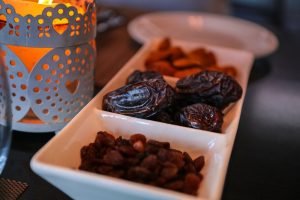
Dates are usually eaten as a snack or used in desserts, but people also ask what they can do for training and for someone who is unwell. Shops in Malaysia sell soft, sweet dates as kurma madu ("honey dates"). That is a seller's name, not a variety. Green Diamond, for example, uses it for Rotab Mazafati from Bam, Iran, and the dates in the photo above are Piarom, so check the pack for the variety. Sportsmen use dates as a carbohydrate snack, and families often bring them to people who are sick. This post looks at both uses and keeps to what the nutrition data and sports guidelines say.
Dates for sportsmen: energy and performance
Sportsmen need carbohydrate. Medjool dates carry about 75 g of carbohydrate per 100 g, most of it sugar (USDA FoodData Central; kurma madu will differ a little by variety). They are not a very fast sugar: a UAE study of five varieties measured a glycemic index of about 46 to 55, which is low. The International Society of Sports Nutrition advises 30 to 60 g of carbohydrate an hour during hard sessions longer than about 60 minutes, and dates are one food that can supply it. We found no trial that tested date fruit itself on sports performance, and no evidence that the potassium or magnesium in dates prevents cramps.
Dates for the sick: energy when appetite is low
For someone who is unwell and not eating much, dates pack a lot of energy into a small portion: 277 kcal per 100 g (USDA). That is their main practical use at the bedside. We found no clinical study showing that dates speed recovery from illness or surgery, reduce inflammation or promote healing, so we make no such claim. What a patient should eat depends on the illness, and the doctor or dietitian's plan comes first.
Carbohydrate needs: sportsmen vs. the sick
Carbohydrates are the primary energy source for both sportsmen and the sick, but their needs differ. For athletes in heavy training, the ISSN position stand says muscle glycogen stores are maximised on a high-carbohydrate diet of 8 to 12 g per kg of body weight a day, and dates can be part of that. For the sick, carbohydrate needs depend on the condition, so there is no single rule. The low GI values in the UAE study come from a small group, and a larger portion of dates still means more sugar. You can read more about the sugar and fibre in dates here.
Protein
Dates are low in protein, about 1.8 g per 100 g (USDA), so they do little for muscle repair on their own. Sportsmen often pair kurma madu with milk, yogurt or nuts. That pairing has some support: when glycogen must be restored within four hours, the ISSN lists carbohydrate combined with protein as one strategy. See our dates for protein shakes post for ways to do it.
Minerals
Per 100 g, Medjool dates have 696 mg potassium, 54 mg magnesium and 0.9 mg iron (USDA). The potassium is a useful amount. The iron is small: men and women over 50 need 8.7 mg a day, and women aged 19 to 49 need 14.8 mg (NHS), so dates will not treat anaemia. We found no evidence that the minerals in dates prevent cramps or fatigue.
Antioxidants
Dates contain phenolic compounds and flavonoids, which act as antioxidants in lab tests. The exercise studies on dates that we found used powdered date seed, not the fruit people eat. There is no good evidence that eating dates reduces muscle damage after exercise or strengthens the immune system in patients.
Digestion
Dates have 6.7 g of fibre per 100 g (USDA). The NHS lists dried fruit among foods that can cause wind (NHS), so a big handful right before a run, or for someone with a sensitive stomach, may not sit well. Start with two or three and see how you feel. People with digestive problems should ask their doctor what suits them.
Dates as a gift
In many Malaysian families a box of dates is a usual thing to bring when visiting someone in hospital or at home sick. It is a way of showing care. It is not a treatment, and the patient's own diet plan still comes first.

Ways sportsmen use them
Common ways to use kurma madu around training:
- Pre-workout snack as a carbohydrate source.
- Carbohydrate during long sessions (the ISSN suggests 30 to 60 g an hour for hard efforts over about 60 minutes).
- Post-workout recovery combined with protein sources.
- Blended into smoothies or pressed into homemade energy bars.
Ways to offer them to someone who is sick
For someone who is unwell, kurma madu can be:
- Small, energy-dense snacks when appetite is low.
- Blended into porridges or smoothies.
- Combined with milk for a more filling snack.
- Brought by family as a traditional gift. None of these replace the diet a doctor or dietitian sets.
Buying kurma madu
Because kurma madu can mean different varieties, ask the seller which one you are getting and check the packing date. Supplier kurma listings and kurma online borong (bulk online) packs are two ways households, clubs and institutions buy larger amounts.
Conclusion
Dates serve diverse roles depending on the consumer. For sportsmen, kurma madu is a convenient carbohydrate source, best paired with protein after training. For the sick, it is an energy-dense snack when appetite is small, not a treatment. The research on date fruit in sport and illness is thin, so the claims above stick to what the nutrition data and sports guidelines support. Buying through kurma online borong makes it easy to keep a pack in the kit bag or bring some on a hospital visit.
This article is general information, not medical advice. If you are ill, recovering from surgery, or have diabetes or kidney disease, ask your doctor or dietitian how dates fit into your diet.
References
- USDA FoodData Central. Dates, medjool (FDC 168191).
- Kerksick CM et al. International Society of Sports Nutrition position stand: nutrient timing. J Int Soc Sports Nutr. 2017;14:33. PMID 28919842.
- Alkaabi JM et al. Glycemic indices of five varieties of dates in healthy and diabetic subjects. Nutr J. 2011;10:59. PMID 21619670.
- NHS. Iron.
- NHS. Flatulence.